![Spray Foam Insulation Fleet: The Complete Guide [2026]](https://thermoshield-ltd.co.uk/wp-content/uploads/2026/06/Spray_Foam_Insulation_Fleet_1408x768_under100kb-1024x559.jpg)
If you’re a homeowner in Fleet, Hampshire, and you’re struggling with rising energy bills, persistent draughts, or a home that refuses to hold heat — spray foam insulation could be exactly what your property needs. Fleet and the surrounding areas of Hart District, including Church Crookham, Cove, and Farnborough, have a mix of housing types ranging from 1960s and 70s estates to newer developments and period properties, many of which fall short of modern insulation standards.
Spray foam insulation is fast becoming one of the most popular home improvement solutions across Fleet and North Hampshire — and for good reason. This guide covers everything you need to know: what it is, how it works, where it’s used, what it costs, and how to find a trusted local installer.
What Is Spray Foam Insulation?
Spray foam insulation is a two-component liquid that, when mixed and sprayed onto a surface, expands rapidly to form a solid foam barrier. It seals gaps, fills cavities, and creates a continuous, airtight layer of insulation that outperforms traditional materials like fibreglass rolls or mineral wool batts.
There are two main types:
- Open-cell spray foam – A lighter, softer foam that is breathable and ideal for interior walls, ceilings, and soundproofing applications. It expands significantly and is excellent at air sealing in internal spaces.
- Closed-cell spray foam – A denser, rigid foam that provides a much higher thermal resistance (R-value) per inch and acts as a vapour barrier. It is best suited to lofts, flat roofs, and areas exposed to moisture or cold.
Both types expand after application to fill every crack, gap, and void — eliminating thermal bridging and air leakage, which are two of the primary causes of heat loss in Fleet homes.
Why Fleet Homeowners Are Choosing Spray Foam Insulation
Fleet sits in the Hart District of Hampshire, which consistently ranks as one of the most desirable places to live in the UK — but that doesn’t mean its homes are always energy efficient. Many properties in Fleet were built between the 1950s and 1990s and have insulation levels that no longer meet today’s standards.
Add to this the cold winters that sweep across the Hampshire countryside, and it’s easy to see why more Fleet homeowners are looking at spray foam insulation as a serious upgrade.
Outstanding Thermal Performance
Closed-cell spray foam offers an R-value of approximately 6 to 7 per inch — considerably higher than fibreglass (R-3.5) or mineral wool (R-3.7). This means you can achieve excellent insulation levels with a much thinner application, making it ideal for properties where space is limited.
Complete Air Sealing
Spray foam doesn’t just reduce heat transfer — it physically seals the pathways through which cold air enters your home. In older Fleet properties where gaps around roof joists, pipework, and wall plates are common, this air sealing effect alone can make a dramatic difference to comfort levels.
Moisture and Damp Resistance
Closed-cell spray foam is highly resistant to water ingress and moisture. This is particularly useful in lofts and underfloor areas where condensation or damp can become a problem over time — especially in Fleet properties close to Fleet Pond, where ambient humidity can be slightly higher.
A Long-Lasting Solution
Unlike fibreglass or mineral wool, which can sag and compress over time, spray foam maintains its shape and performance for the lifetime of the building. It’s a one-time installation that keeps delivering year after year — making it excellent value for money for Fleet homeowners thinking long term.
Where Is Spray Foam Insulation Used in Fleet Properties?
Spray foam insulation is a versatile product that can be applied across a wide range of areas in both residential and commercial buildings throughout Fleet and the wider Hart District.
Loft and Roof Insulation
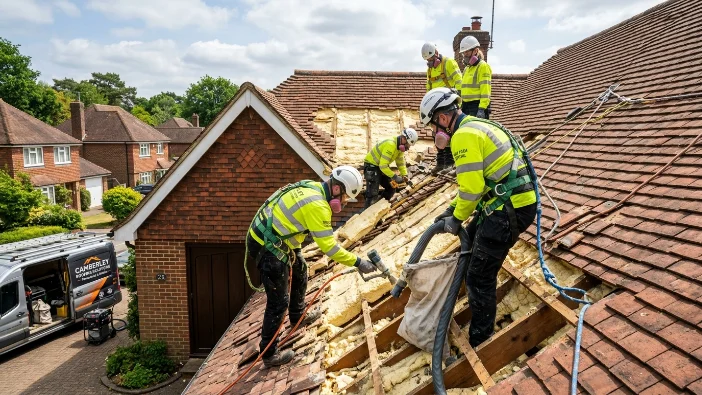
The most common application in Fleet is insulating the underside of roof rafters in loft spaces. This is particularly effective in properties where the loft is used as a room, or where the roof structure makes traditional roll-out insulation difficult to install effectively. Spray foam bonds directly to the rafters and creates a seamless thermal envelope with no cold bridges or gaps.
Cavity Wall Insulation
Many Fleet homes built between the 1930s and 1980s have unfilled cavity walls that allow significant heat loss. Spray foam can be injected into these cavities to provide a thorough fill — especially useful in properties with obstructions or non-standard cavity widths where blown mineral wool may not perform as well.
Underfloor Insulation
Suspended timber floors are common in older Fleet properties and can be a major source of draughts and heat loss. Spray foam applied beneath the floorboards seals gaps and insulates the floor without requiring the boards to be lifted — a quick, clean, and highly effective solution.
Flat Roof Insulation
Fleet has many bungalows and properties with flat roof extensions where heat loss through the roof is a significant issue. Closed-cell spray foam can be applied to flat roofs both internally and externally, providing excellent insulation and a watertight seal in one application.
Garage and Outbuilding Insulation
Spray foam is widely used in garages, home offices, garden studios, and workshops across Fleet — particularly as the trend for home working has increased demand for comfortable, insulated outbuildings. It can be applied quickly to large areas and delivers immediate results.
Spray Foam Insulation and Mortgages: What Fleet Homeowners Need to Know
Before proceeding with spray foam insulation in your Fleet home, it’s important to understand the potential implications for your mortgage. In recent years, a number of high street lenders have raised concerns about spray foam applied directly to roof timbers — primarily because it can make it difficult to inspect the underlying timber for signs of rot or structural damage.
If you are planning to remortgage, sell your property, or apply for a new mortgage in the near future, this is something you should discuss with your mortgage adviser before installation. The situation is evolving and not all lenders take the same view, but it’s a risk worth being aware of.
To minimise any issues, always use a fully accredited installer, ensure the work is documented with a proper warranty, and consider open-cell foam options for loft spaces where roof timber inspection may be required in the future.
How Much Does Spray Foam Insulation Cost in Fleet?
The cost of spray foam insulation in Fleet depends on the area to be treated, the type of foam selected, and the specific requirements of your property. Below is a general guide to typical costs in the Fleet and North Hampshire area:
| Application | Estimated Cost Range |
|---|---|
| Loft / roof rafter insulation | £1,500 – £4,500 |
| Cavity wall insulation | £500 – £2,000 |
| Underfloor insulation | £800 – £2,500 |
| Flat roof insulation | £1,000 – £3,500 |
| Garage or outbuilding | £600 – £3,000 |
These figures are approximate. Every property is different, and a reputable Fleet-based installer will carry out a full survey before providing a detailed quote.
While the upfront cost may seem significant, spray foam insulation typically delivers energy bill savings of 20–40% per year. For the average Fleet household spending £1,800 or more annually on heating, that could mean savings of £360–£720 every year — meaning the insulation often pays for itself within five to ten years.
How to Find a Trusted Spray Foam Insulation Installer in Fleet
Choosing the right installer is crucial. The quality of installation makes all the difference to performance, longevity, and whether any future mortgage or property survey issues can be handled smoothly.
Look for Recognised Accreditations
Always choose an installer who holds accreditation from a recognised trade body. Key organisations include:
- National Insulation Association (NIA) — sets professional standards for insulation contractors across the UK
- Insulation Assurance Authority (IAA) — provides independent quality assurance for insulation installations
- British Board of Agrément (BBA) — certifies insulation products and systems for use in UK construction
Insist on a Full Property Survey
No reputable installer should quote for spray foam without first visiting your Fleet property to carry out a proper survey. Be cautious of any company offering fixed online quotes without an assessment.
Ask for Local References
A good installer will have completed projects across Fleet and the surrounding areas of Hart District, Rushmoor, and Surrey Heath. Ask for references or case studies from recent local jobs.
Compare at Least Three Quotes
Getting multiple quotes gives you a realistic picture of the going rate in Fleet and allows you to compare what’s included — materials, preparation, clean-up, and warranty terms.
Confirm the Warranty
Professional installations should come with a warranty of at least 10 years, backed by a reputable insurance provider. Confirm the warranty is in writing before work begins.
Government Grants and Financial Support for Fleet Residents
Fleet homeowners may be eligible for financial assistance towards insulation costs through national and local government schemes.
The ECO4 scheme (Energy Company Obligation) and the Great British Insulation Scheme are two government-backed programmes designed to help households with lower incomes or properties with poor energy efficiency access insulation improvements at reduced or zero cost. Eligibility is assessed based on household income, benefit entitlement, and the current Energy Performance Certificate (EPC) rating of your property.
Hart District Council has also participated in regional energy efficiency initiatives from time to time. It’s worth contacting the council directly or speaking to a registered energy assessor to understand what support may currently be available to you in Fleet.
Is Spray Foam Insulation the Right Choice for Your Fleet Home?
Spray foam insulation is an excellent option for many Fleet properties — but as with any home improvement, it’s important to assess whether it’s the right fit for your specific situation.
It works particularly well when:
- Your property has awkward roof structures, irregular cavities, or hard-to-reach spaces
- You want a combined insulation and air sealing solution in a single application
- You are not planning to sell or remortgage in the near future
- You want a long-term, low-maintenance insulation product that won’t need replacing
It may be less suitable if you are planning to sell shortly, if your lender has specific concerns about foam on roof timbers, or if your property is listed or in a conservation area where planning restrictions may apply.
A qualified energy assessor or local insulation specialist can help you weigh up the options and make the right decision for your home.
Conclusion: Make Your Fleet Home Warmer and More Efficient with Spray Foam Insulation
Spray foam insulation is one of the most effective and durable home improvement investments available to Fleet homeowners today. Whether you live in a semi-detached house near Fleet town centre, a bungalow off the Guildford Road, or a newer build on the outskirts of Church Crookham, the right insulation solution can transform your home’s comfort and dramatically reduce your energy bills.
With experienced, accredited installers operating across Fleet and the wider North Hampshire area, and government grant schemes potentially reducing the cost, there’s never been a better time to explore spray foam insulation for your property.
Start with a professional survey — and take the first step towards a warmer, quieter, and more energy-efficient home.
Frequently Asked Questions
Is spray foam insulation worth it in Fleet?
Yes. Fleet’s mix of older housing stock and cold Hampshire winters makes spray foam one of the most effective insulation upgrades available, with potential energy bill savings of 20–40% per year.
Will spray foam insulation affect my mortgage in Fleet?
It can. Some lenders are cautious about foam applied to roof timbers as it hinders structural inspection. Always consult your mortgage adviser before installation to understand your lender’s position.
How long does spray foam insulation last?
Spray foam typically lasts the lifetime of the building — 30 to 50 years or more. Unlike mineral wool or fibreglass, it does not sag, compress, or degrade over time.
Can spray foam insulation be removed?
Open-cell foam is easier to remove, but closed-cell foam bonds tightly to surfaces and removal can be difficult and costly. Choosing the right product from the outset with a qualified installer is essential.
How much does spray foam loft insulation cost in Fleet?
For a typical Fleet home, loft spray foam insulation costs between £1,500 and £4,500 depending on roof size, accessibility, and foam type. A free survey from a local installer will give you an accurate quote.