Your buyer’s mortgage application has come back rejected. Or your own remortgage has stalled. The reason on the survey report: spray foam insulation in the loft.
If this has just happened to you in Camberley, you’re not alone, and it’s not something you did wrong. It’s a problem affecting an estimated 250,000+ homes across the UK. The good news is that it has a clear, permanent fix.
Why Spray Foam Stops a Mortgage in Its Tracks
Spray foam insulation sticks permanently to roof timbers, sealing them under a thick layer of foam. This causes two problems for mortgage lenders:
- Surveyors can’t see the timbers underneath. A standard survey needs to check the wood for rot, damp, and structural issues. Spray foam covers all of it, so the surveyor simply can’t confirm the roof is sound.
- Closed-cell foam can trap moisture. If the foam used was the rigid, airtight “closed-cell” type, it can stop the roof from breathing properly. Over time, trapped moisture can rot the timber it’s sitting against — exactly the kind of damage the surveyor can’t check for.
Because lenders can’t confirm the roof is safe to lend against, many simply decline the application rather than take the risk.
Which Lenders Actually Reject Spray Foam Properties?
This varies by lender, and it’s worth knowing the difference:
Lenders with a known outright ban: TSB Bank has a complete policy against lending on spray foam properties. Skipton Building Society, Principality, the Co-operative Bank, and equity release provider Aviva have also confirmed they won’t lend on these properties, following a BBC investigation into the issue.
Lenders who assess case-by-case: Several major high street names, including Lloyds, Nationwide, Barclays, NatWest, and Santander, have said they’ll consider an application based on the valuer’s report rather than an automatic refusal. In practice, this still means many applications get declined once a surveyor flags the foam.
The bottom line: even with a “case-by-case” lender, spray foam in your loft is a red flag that can sink a sale or remortgage at the last minute — often after you’ve already paid for surveys and solicitors.
Is All Spray Foam Equally Risky?
No — there are two types, and it matters which one you have:
- Open-cell foam is softer and more flexible. It’s generally easier and cheaper to remove.
- Closed-cell foam is rigid and airtight. It’s the type most linked to trapped moisture and timber rot, and it’s more expensive to remove.
You may not know which type is in your loft, especially if it was installed by a previous owner or through a government grant scheme. A professional inspection will identify the type and check for any existing timber damage before removal.
How Common Is Hidden Damage Under the Foam?
This is worth knowing before you assume your roof is fine underneath. Industry inspections of properties with spray foam have found that a significant share — around a third — had at least one defect once the foam was removed and the timbers properly examined, according to the Property Care Association and the Homeowners‘ Alliance.
This is exactly why lenders insist on inspection before they’ll lend — and exactly why removal needs to be done by a professional who can spot and report on any damage found.
The Fix: Professional Removal and a Compliant Certificate
The only solution that consistently restores mortgageability is having the spray foam professionally removed, followed by a proper roof timber inspection.
Here’s what the process actually looks like:
- Inspection — a specialist checks the foam type and condition of the timbers underneath
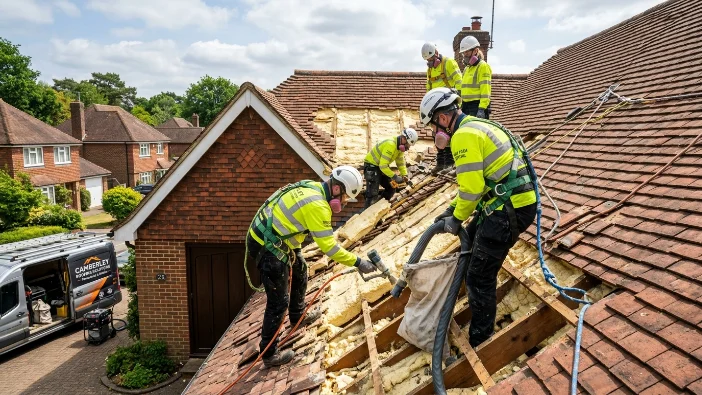
- Removal — the foam is carefully stripped away without damaging the roof structure
- Timber check and any repairs — any rot or damage found is repaired
- Certificate issued — you receive written documentation confirming the foam has been removed and the roof meets standard requirements
This certificate is what you’ll hand to your buyer’s solicitor, your lender, or your broker. Without it, you’re simply back to square one with the next application.
What Does Removal Cost?
Costs vary depending on your loft size and the type of foam, but as a guide:
- A typical three-bedroom home: roughly £3,000–£4,000
- Larger or closed-cell foam properties: £5,000–£8,000+
It’s not a small cost. But compare it to the alternative — a sale falling through, or being stuck unable to remortgage a property you can’t sell. There’s currently no government funding available for removal, so this is a cost most homeowners pay directly, though it’s worth checking your original installer’s paperwork in case a guarantee applies.
What This Means If You’re Selling in Camberley Right Now
If you’ve got a sale in progress and the buyer’s survey has just flagged spray foam, time matters. The fastest path is usually:
- Get a removal quote and timeline immediately
- Be upfront with your buyer about the plan and timeline
- Get the removal and certificate completed before the next survey or mortgage offer deadline
Many sales don’t actually collapse over spray foam — they collapse over the delay it causes when nobody acts quickly.
Frequently Asked Questions
Will removing spray foam guarantee my mortgage gets approved?
It significantly improves your chances, since it removes the main reason for refusal. The lender will still assess the rest of the property as normal, but the spray foam objection itself is resolved.
How long does spray foam removal take?
Most domestic lofts take one to three days, depending on the size and how much foam needs to be removed.
Can I remove spray foam myself to save money?
This isn’t recommended. Spray foam removal involves specialist tools, and a DIY job won’t produce the certificate lenders and buyers need. Poor removal can also damage the timbers it’s stuck to.
I didn’t know spray foam would cause this — can I get compensation?
If your foam was installed through a grant scheme like ECO4 or the Green Homes Grant without being told about the mortgage risk, it’s worth checking if you have grounds for a complaint against the installer or a claim under an insurance-backed guarantee.
Get a Removal Quote and Certificate in Camberley
If spray foam is holding up your sale, remortgage, or peace of mind, the sooner it’s resolved, the better.
![Spray Foam Insulation Fleet: The Complete Guide [2026]](https://thermoshield-ltd.co.uk/wp-content/uploads/2026/06/Spray_Foam_Insulation_Fleet_1408x768_under100kb-1024x559.jpg)